Choosing a portable Bluetooth speaker is easier when you start with the moment you want it to improve. A speaker for quiet cooking, a beach bag, a backyard table, and a living-room karaoke night does not need to do exactly the same job. The most useful choice is not the one with the most dramatic claim on its box. It is the one you will actually reach for because its size, protection, battery expectations, and sound fit the way you listen.
Use this guide to narrow the options before you get lost in vague feature lists. Begin with your usual setting, then look at portability, water protection, battery planning, and connection habits. That order keeps the decision tied to real life instead of a spec sheet.
1. Start with where the speaker will spend its time
Picture the first few times you will use the speaker. If it will mostly sit on a kitchen counter or desk, easy controls and a compact footprint may matter more than maximum loudness. For a patio, park, or picnic, carrying comfort and battery planning move up the list. Near a pool, at the beach, or in a bathroom, the water-resistance rating and charging-port care deserve more attention.
It also helps to be honest about the size of the space. A compact speaker placed near the people listening can feel surprisingly full in a bedroom, hotel room, or small patio. Trying to make a small portable speaker fill a large, open gathering space often leads to harsh volume and disappointment. If the point is background music for conversation, choose convenient placement first. If the point is a party, a karaoke-focused setup or a larger speaker may fit the job better.
The store’s portable karaoke speaker guide is a better path when the plan centers on singing and shared energy. For music that needs to travel through ordinary days, a lighter speaker that is easy to pick up and place may be the better buy. Matching the speaker to the job is the first way to avoid paying for features that look impressive but sit unused.
2. Decide how portable it really needs to be
Portable can mean a small speaker that disappears into a day bag, a grab-and-go model you move from room to room, or a larger unit with enough presence for a group. Weight, shape, and where you will store it are practical details, not boring footnotes. A speaker that is awkward to pack, needs a special bag, or takes up the only clear space on a counter is less likely to come along.
Think about the distance between where you store the speaker and where you use it. A compact model is easier to carry to the porch, bathroom, kitchen, or friend’s place. A larger one can make sense when it has a dedicated purpose, such as game night or a regular backyard gathering. Neither is automatically better. The better choice is the one that makes pressing play feel simpler than using your phone speaker.
Look at stability, too. Rounded shapes and compact designs are convenient, but they still need a flat place to sit. If your usual listening happens around pets, kids, towels, drinks, or busy walkways, choose a speaker you can place securely rather than balancing it on an armrest. A safe spot improves sound and helps the speaker last longer.
3. Choose water protection for the conditions you actually expect
Water protection is useful when it matches a real risk. A speaker that stays indoors on a shelf may not need the same protection as one that follows you to pool days, showers, or a damp patio. Product ratings help describe resistance to water and dust, but they are not a permission slip to ignore care instructions. The rating, the product guide, and the exact situation all matter.
The International Electrotechnical Commission explains that an IP code describes how well an enclosure protects against solids and water under specific test conditions. It is not one universal promise for every type of use. Check the product’s stated rating and instructions, keep ports closed when required, and never charge a speaker while the connection is wet. Those small habits matter more than treating a rating as a dare.
If water is part of your normal plans, the store’s portable waterproof Bluetooth speaker is designed for that kind of everyday flexibility, with an IPX7 water-resistance rating listed on its page. It is still smart to keep any speaker on a stable surface away from the water’s edge, dry it before charging, and follow the care guidance. Protection should reduce worry, not replace common sense.
4. Treat battery claims as a planning tool, not a guarantee
Battery life is one of the most useful portable-speaker details, but it changes with volume, the music playing, wireless connection conditions, and other features in use. A manufacturer’s listed time is a helpful comparison point, not a promise that every day will look exactly the same. The simplest way to get reliable use is to choose a speaker whose listed battery time comfortably covers your normal plans and then start the day with a full charge.
For a short kitchen playlist or an hour on the porch, almost any reasonable portable battery can be enough. For travel, outdoor days, or a longer gathering, give yourself more margin. It is frustrating to turn a speaker down or hunt for an outlet just as people settle in. Keep the charging cable where you can find it, and know whether the speaker uses the same cable type as the rest of your everyday gear.
Do not judge battery value only by the largest number. A small speaker with enough power for the moments you actually have is often more useful than a heavy speaker you leave at home. The right question is: will it stay charged through my normal use, and will I realistically remember to charge it? A speaker that fits your routine wins.
5. Check the connection you will use, then test it once
Bluetooth should feel invisible after the first successful pairing. Before a trip, gathering, or gift, pair the speaker with the phone, tablet, or laptop you expect to use and play a complete song. That quick test reveals more than a short startup sound. You can check the volume, confirm the controls make sense, and see whether the source device stays connected from the place you will actually sit.
Range claims are best treated as an ideal-condition estimate. Walls, people, other wireless devices, and outdoor obstacles can reduce it. Keep the source nearby when connection stability matters, especially at a party where someone may walk away with the phone. If the sound cuts out, move the source closer before assuming something has failed.
Also consider how the speaker fits into other entertainment you already use. For a projector movie night, the Bluetooth speaker-to-projector connection guide explains why you should check whether the projector can send audio over Bluetooth before you make that part of the plan. The speaker does not need to connect to everything. It just needs to connect dependably to the devices you use most.
6. Think about sound for the room, not a number on a listing
Sound is personal, and a portable speaker has physical limits. In a small room, clear music at a comfortable volume is more useful than trying to create a wall of sound. Outdoors, sound disperses quickly, so moving the speaker closer to listeners can help more than pushing the volume higher. A speaker placed at about table height and pointed toward the group often works better than one hidden behind bags or placed on the ground.
If you care about podcasts, vocals, or dialogue, test content with a voice, not only a bass-heavy song. If you care about a relaxed party playlist, test it at the level you would actually use around other people. The best check is whether the sound feels clear and comfortable in your own setting. Loud is not automatically better, especially in a small apartment, hotel room, or shared outdoor area.
For a more energetic group plan, choose the speaker type for that purpose from the start. The store’s audio and wearables collection gives you a direct way to compare the available listening options. Use product details to confirm the features that matter, then choose the size and style that make sense for your usual room or outing.
7. Make the first setup easy to repeat
A speaker that is ready to use becomes part of a routine. After the first pairing, give it a predictable home with its cable nearby, especially if you plan to take it outside often. That avoids the small friction that turns a useful gadget into something left in a drawer. When you bring it to a new place, start with a short test track before people arrive or before you head away from an outlet.
Placement matters more than it seems. Keep the speaker on a solid surface with a little open space around it, aim it toward the listeners, and avoid tucking it into a shelf, corner, or pile of bags. Put the source device where it will not get lost, wet, or taken out of range. If you are outdoors, move the speaker closer to the group rather than only turning it louder. That small change usually gives everyone a clearer, more comfortable listen.
Finally, let the plan determine the volume. At home, begin low and bring it up only as the room needs it. In shared spaces, a considerate level keeps the music welcome. Portable audio works best when the setup fades into the background and leaves people free to enjoy the moment. A comfortable setup is the kind you can repeat without checking a manual every time.
8. Use this short buying checklist before you decide
- Write down the two or three places you will use the speaker most.
- Choose a size you will actually carry, place, and store comfortably.
- Check the water-protection rating only if your plans genuinely need it.
- Pick enough listed battery time for a normal day, with room to spare.
- Confirm the speaker can pair with the phone, tablet, or other source you use.
- Keep expectations realistic for the size of the room or outdoor space.
- Test one complete song before the first trip, party, or pool day.
A portable Bluetooth speaker earns its place by making music easier to enjoy where life is already happening. Choose for your own habits, take a minute to set it up well, and it can become the bit of tech that moves naturally from an ordinary morning to a weekend plan without any fuss.
Frequently asked questions
What should I look for in a portable Bluetooth speaker?
Start with where you will use it most, then check the features that support that setting: size and carry convenience, water resistance when needed, battery expectations, connection options, and clear product details about how it is meant to be used. A speaker that matches your real plans is more useful than one with a long list of features you will never touch.
Is a waterproof portable speaker worth it?
It is worth considering when your listening regularly moves near a pool, beach, bathroom, patio, or unpredictable weather. Water resistance does not make every speaker safe for every kind of water exposure, so check the product rating and care instructions, keep ports closed, and let the speaker dry before charging.
How much battery life do I need in a portable speaker?
Choose enough listed battery time for your usual plans with some room to spare. A short kitchen playlist needs less than a full day outside or a long gathering. Real battery time changes with volume, music, and connection use, so a full charge before a trip remains the most dependable plan.
Do bigger portable speakers always sound better?
Not always. A larger speaker can be useful for a larger space or group, but it also takes up more room and may be less convenient to carry. For close-up listening, a compact speaker placed near the people often feels clearer and more useful than a bigger speaker pushed across a room.
Related posts

Portable Projector Setup: Get a Clear Picture Anywhere
A practical guide to placing, focusing, connecting, and tuning a portable projector for movie night, gaming, or a quick big-screen setup.

How to Connect Your Phone to a Projector
A practical guide to wired and wireless phone-to-projector connections, plus the compatibility checks that prevent a movie-night scramble.
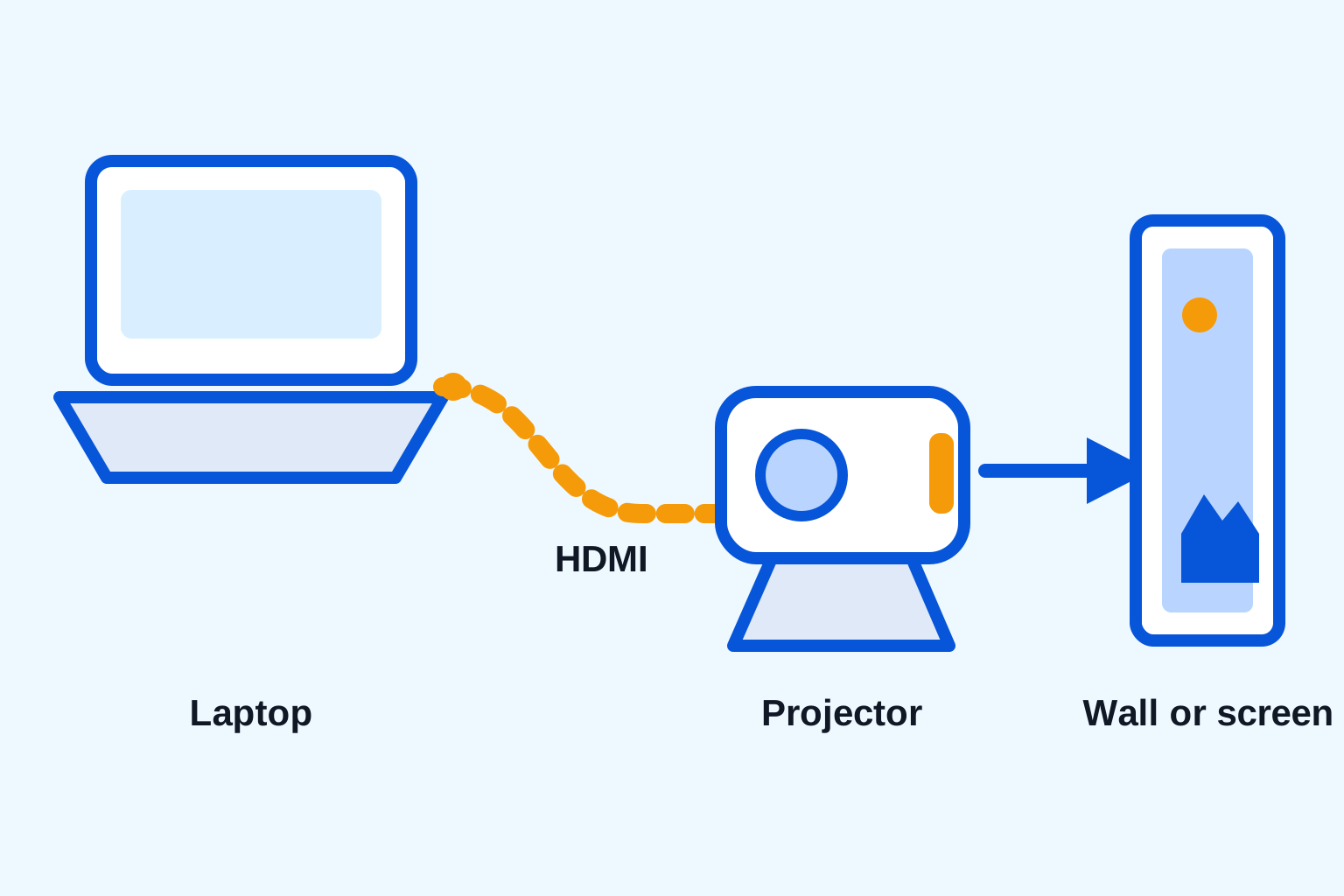
How to Connect a Laptop to a Projector
A simple laptop-to-projector guide for HDMI, display settings, sound, and the quick checks that prevent a blank screen.

How to Connect a Bluetooth Speaker to a Projector
A simple guide to pairing a Bluetooth speaker with a projector, choosing the right audio output, and solving common sound problems.